Reflex Bag vs Heavy Bag: What Actually Builds Skill
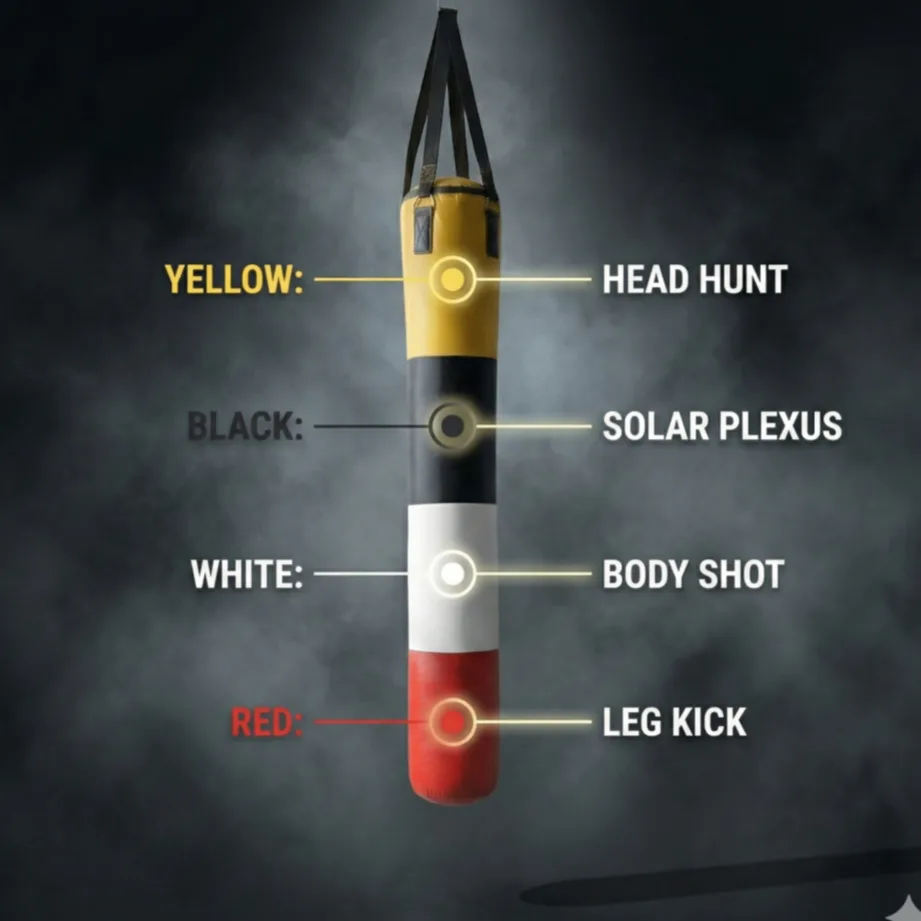
A reflex bag builds timing and defense. A heavy bag builds power, structure, and conditioning. They train different skills and neither replaces the other — but if you only have space for one, the answer depends on where you are in your training and what you actually need to fix.
Here's an honest side-by-side and a recommendation for home setups.
Direct Comparison
| Attribute | Reflex Bag | Heavy Bag |
|---|---|---|
| Primary skill | Timing, head movement, accuracy | Power, structure, conditioning |
| Feedback | Rebound speed matches your rhythm | Impact absorption, real resistance |
| Space required | 3x3 ft footprint, freestanding | Overhead mount, swing clearance |
| Noise | Quiet (rebound only) | Louder (impact + chain) |
| Cardio value | Moderate (reactive movement) | High (sustained output) |
| Kick training | No | Yes (if bag is long enough) |
| Skill ceiling | Novelty after 6-12 months | Lifetime training tool |
| Price range | $80-200 | $125-400 |
Reflex Bag — What It's Actually Good For
A reflex bag is a small ball on a flexible pole with a weighted base. You punch it, it snaps back. The value:
- Head-movement reps. The bounce forces you to slip, roll, or block.
- Hand-eye coordination. Useful for beginners learning to see punches, not just throw them.
- Silent training. No hanging hardware, no impact noise.
- Small footprint. A base and a bag — that's it.
The limits:
- No real impact absorption. You can't throw a full-power punch without the pole snapping.
- No kick or knee training.
- The rebound pattern is repetitive. Your reflexes adapt to the bag, not to a fighter.
- After the first year, most people stop using it.
Heavy Bag — What It Actually Trains
A hanging heavy bag teaches structure. When you land a punch on a real 30-65 lb bag:
- Your hips have to rotate or your shoulder collapses.
- Your wrist has to align or you feel it in the joint.
- Your feet have to plant or your power vanishes.
That feedback loop is why heavy bags remain the backbone of every combat sport. Reflex bags don't produce it — nothing rebounds "wrong" enough to correct your form.
Add rounds of sustained work and you get real conditioning. A five-round session on a heavy bag is a cardio and structural workout a reflex bag can't approximate.
Who Each Suits
Buy a reflex bag if:
- You're brand new and want to build reaction habits before impact training.
- You cannot mount anything overhead (strict rental, drop ceiling).
- You want a silent, low-space complement to shadowboxing.
Buy a heavy bag if:
- You want a training tool that scales from beginner to advanced.
- You want to develop real power and structural technique.
- You can hang something from a joist, stud, or bracket.
- You want conditioning, not just coordination.
Why a Compact Heavy Bag Wins for Home
The old "reflex bag for apartments" recommendation exists because most heavy bags were too big, too heavy, and too loud for small spaces. That's no longer true.
A compact 8-inch heavy bag with 30-65 lb adjustable fill:
- Fits in the same 3x3 ft footprint as a reflex bag base.
- Hangs from a single joist or stud (7 ft ceilings work).
- Ships unfilled — no freight, standard carrier.
- Runs quieter than a chain-mounted commercial bag when you add a spring and rubber pad.
- Trains structure, power, cardio, kicks, and knees.
You give up the reflex-rebound drill. You gain everything else. For most home trainers, that's the right trade.
Can You Have Both?
Yes, and it's a reasonable setup:
- Reflex bag for the first 5 minutes of a session — hand-eye warmup, defensive movement.
- Heavy bag for the main 20-40 minutes — technique rounds, power rounds, cardio finishers.
The Python Bag was designed with this pairing in mind. Its short strap system and compact profile leave enough room in most home gyms to keep a reflex bag beside it. See how it's spec'd on the Facts page.
Frequently Asked Questions
Which is better for beginners — reflex bag or heavy bag?
Heavy bag. A compact one teaches structure from day one. Reflex bags teach reaction but let you build bad form because there's no real impact.
Are reflex bags a waste of money?
Not a waste, but often a plateau. Most people outgrow them within a year. If you already own one, keep it as a warmup tool. If you're choosing one purchase, buy a heavy bag.
Can a heavy bag train defense and head movement?
Yes. Practice slipping around it, pivoting off strikes, and moving to angles. The bag's swing after impact gives real timing feedback if you actually move with it.
What if I have low ceilings?
A 55-inch compact heavy bag hangs cleanly in 7-foot ceilings using short straps. Traditional 6-foot bags don't fit.
Is a heavy bag too loud for an apartment?
Not if it's small, hung with a spring isolator, and mounted correctly. See our apartment guide for the full sound-damping setup.
Bottom Line
Reflex bags teach you to see. Heavy bags teach you to hit. If you have to pick one, pick the heavy bag — ideally a compact one built for real home spaces. Everything a reflex bag does can be approximated by shadowboxing in a mirror. Everything a heavy bag does can't be faked.
Community-driven designs and vote-to-manufacture drops happen in The Lab.